What is a GST Tax Invoice? A GST tax invoice is a formal document issued by a GST-registered seller to a buyer. It records the supply of goods or services, the applicable GST (CGST + SGST for intrastate, or IGST for interstate), and enables the buyer to claim Input Tax Credit (ITC).
Mandatory Fields on a GST Invoice
- Your business name, address, and GSTIN
- Invoice number (sequential, financial year-wise)
- Invoice date
- Buyer's name, address, and GSTIN (if registered)
- HSN/SAC code for each item
- Description, quantity, and unit price
- Taxable value per item
- GST rate and amount (CGST + SGST or IGST)
- Total invoice value
- Place of supply (state)
- Signature or digital authentication
CGST vs SGST vs IGST — Which to Use?
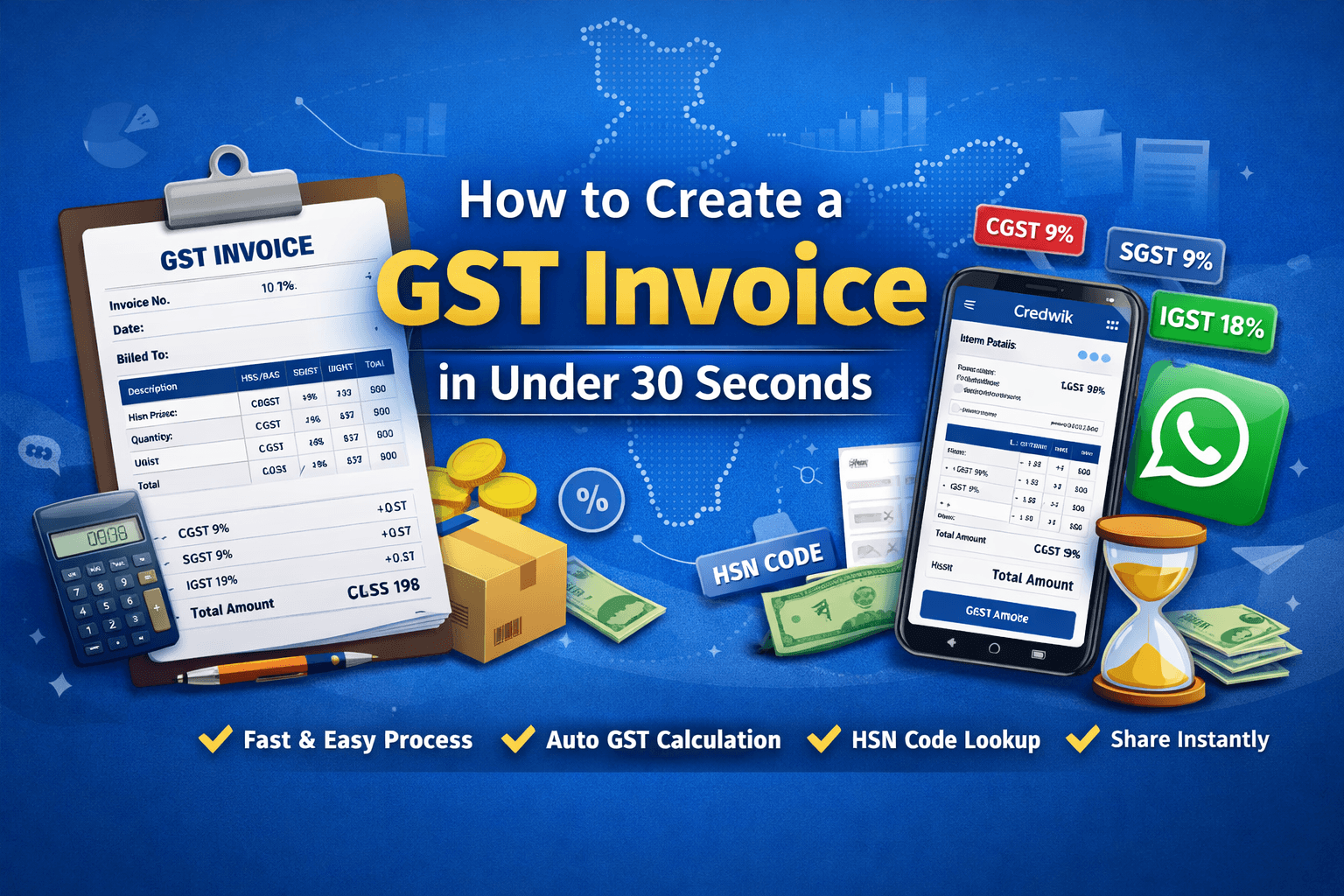
If you're selling to a buyer in the same state, apply CGST + SGST (each at half the GST rate). If you're selling to a buyer in a different state, apply IGST (at the full GST rate). For example, for a 18% GST item sold within the state: CGST = 9%, SGST = 9%.
How to Create a GST Invoice in Under 30 Seconds with Credwik
- Open Credwik app → tap "New Invoice"
- Select customer from your party list (or add new)
- Add items — HSN codes auto-filled from your catalogue
- GST (CGST/SGST/IGST) calculated automatically
- Tap "Share on WhatsApp" — done
Common Mistakes to Avoid
- Missing or incorrect GSTIN on invoice
- Wrong HSN code (attracts penalty)
- Not maintaining sequential invoice numbering
Applying CGST+SGST for interstate sale (should be IGST) Not issuing invoice within prescribed time (30 days for goods, 45 days for services) Credwik automatically handles all of these — correct GST split, HSN lookup, sequential numbering, and timestamps — so you can focus on running your business, not accounting.