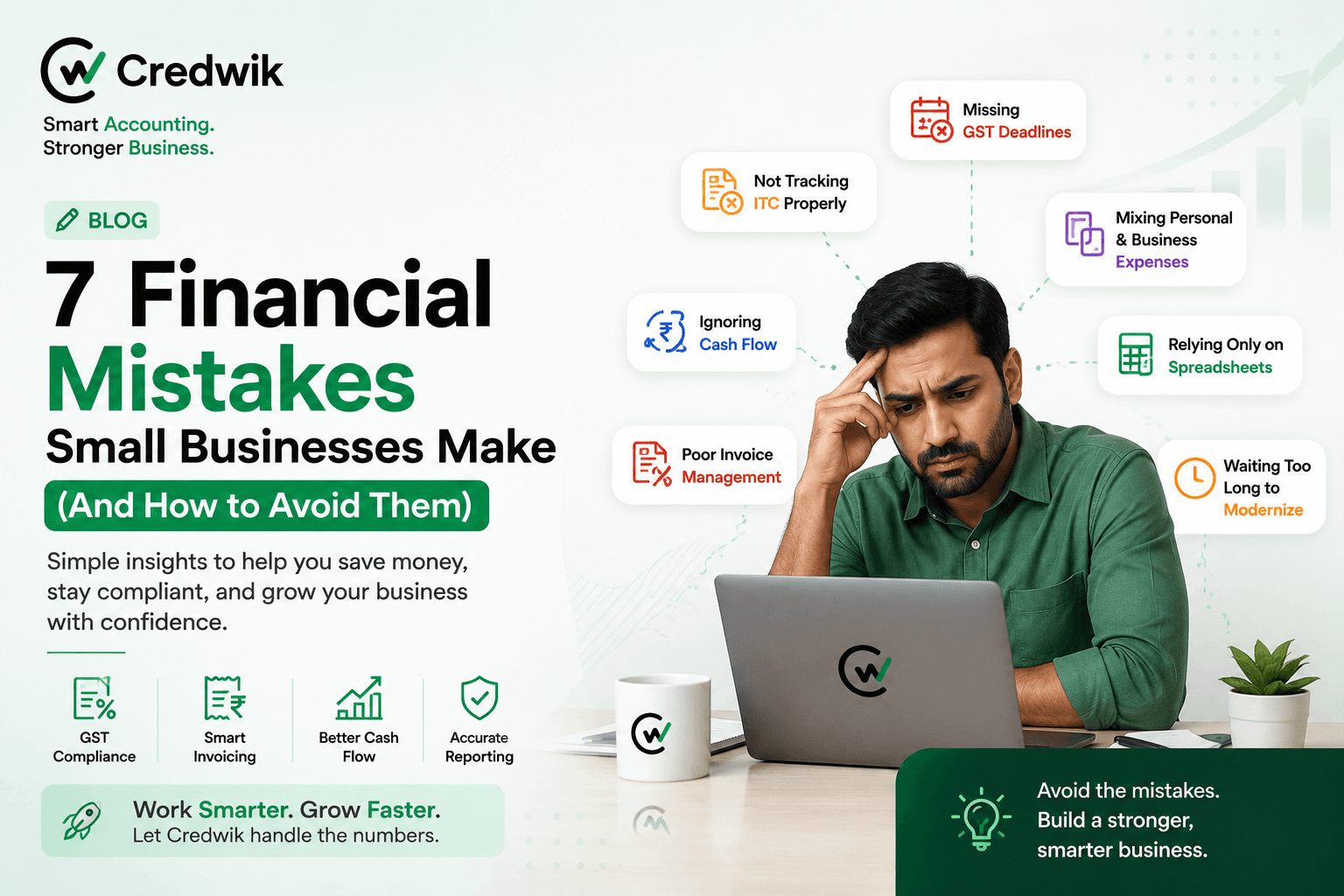
At Credwik, we’ve studied the most common accounting and GST problems faced by small businesses, traders, startups, and shop owners. Here are the biggest mistakes businesses make regularly and how you can avoid them.
1. Missing GST Deadlines
One of the most common problems businesses face is delayed GST filing. Many business owners either:
- forget filing dates
- delay invoice entries
- or depend completely on accountants for reminders
This leads to:
- late fees
- penalties
- blocked Input Tax Credit (ITC)
- compliance stress
How to Avoid It
- Maintain invoices regularly instead of monthly bulk entries
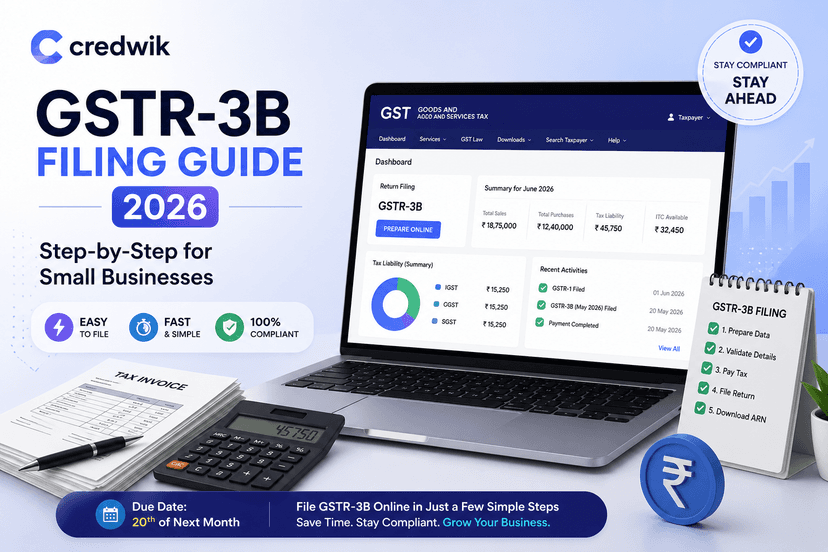
- Use automated GST reminders
- Keep sales and purchase data organized in one system
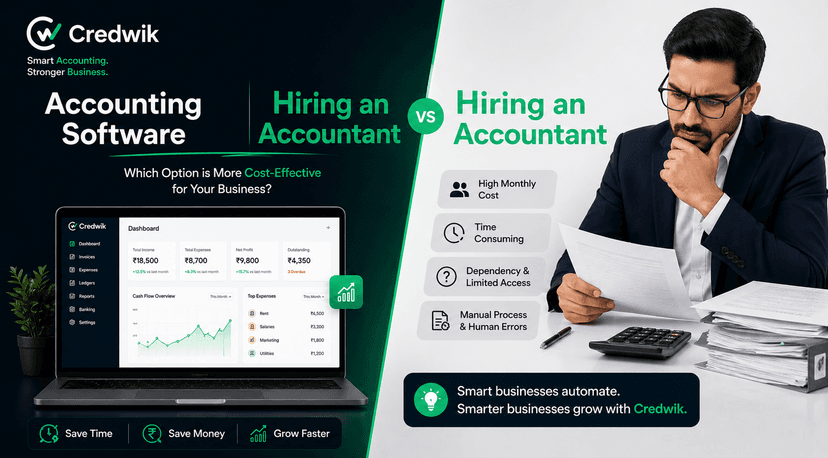
Modern accounting platforms like Credwik are being designed to simplify this entire workflow so businesses stay compliant without the usual chaos.
2. Not Tracking Input Tax Credit (ITC)
A surprising number of businesses overpay GST simply because they don’t properly track ITC claims.
Here’s the issue:
If your supplier’s GSTR-1 doesn’t match your GSTR-2B, you may lose eligible tax credits.
Most businesses don’t monitor this actively.
Result? You end up paying more GST than necessary.
How to Avoid It
- Regularly reconcile purchase invoices
- Monitor supplier GST filings
- Track mismatches early
Even small ITC leaks every month can become massive yearly losses.
Tiny cracks sink large ships 🚢
3. Mixing Personal and Business Expenses
This happens more often than people admit. Using the same bank account for:
- personal shopping
- business expenses
- family payments
- vendor transactions
creates accounting confusion very quickly.
It becomes difficult to:
- calculate profits accurately
- file taxes properly
- track cash flow
- understand actual business performance
How to Avoid It
- Use separate business accounts
- Categorize expenses properly
- Maintain digital records instead of manual notes
Clear financial separation creates better business decisions.
4. Depending Entirely on Spreadsheets
Spreadsheets feel simple initially.
But as transactions grow, they become:
- harder to maintain
- error-prone
- slow
- difficult to scale
One accidental formula mistake can distort entire reports.
And manually updating GST data every month becomes exhausting.
How to Avoid It
Use accounting systems that automate:
- invoices
- calculations
- reports
- GST summaries
- expense tracking
Automation reduces both stress and costly human errors.
5. Ignoring Cash Flow
Many businesses focus only on revenue.
But revenue is not profit. And profit is not cash flow.
A business may show strong sales while still struggling to pay:
- salaries
- vendors
- rent
- taxes
Why? Because pending payments and poor expense tracking create liquidity problems.
How to Avoid It
Track:
- receivables
- dues
- recurring expenses
- payment timelines
Cash flow visibility is one of the biggest survival advantages for growing businesses.
6. Poor Invoice Management
Missing invoices create multiple problems:
- payment delays
- tax complications
- reconciliation issues
- customer disputes
Some businesses still create invoices manually or through disconnected systems. This wastes time and increases mistakes.
How to Avoid It
Use digital invoicing systems that:
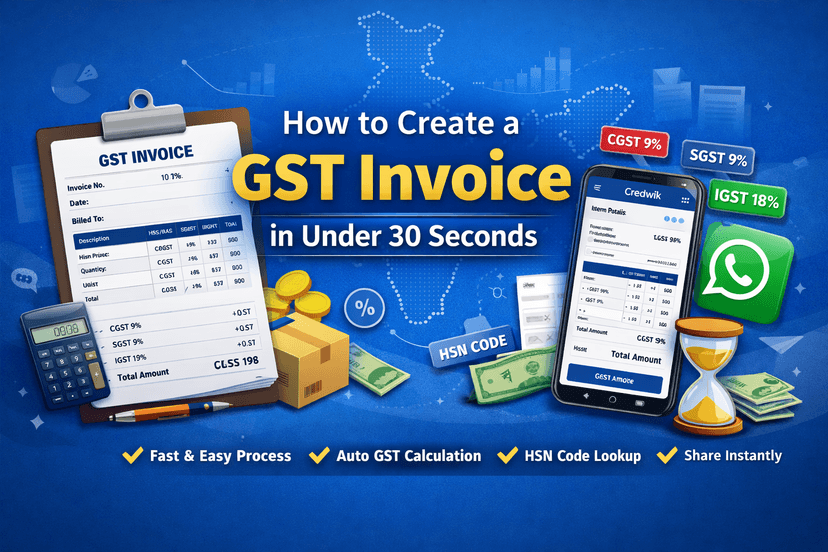
- generate GST invoices instantly
- track payment status
- organize customer history
- reduce manual work
Fast invoicing improves both professionalism and collections.
7. Waiting Too Long to Modernize
Many businesses continue using outdated systems simply because:
- “this is how we’ve always done it”
- switching feels difficult
- staff resists change
But outdated processes quietly drain:
- time
- accuracy
- productivity
- growth opportunities
Modern businesses need modern financial systems.
The faster businesses adopt smarter tools, the easier scaling becomes.
Why Businesses Are Looking for Simpler Accounting Tools
Most traditional accounting software feels:
- complicated
- cluttered
- outdated
- difficult for non-accountants
Small business owners don’t want accounting headaches.
They want:
- clarity
- automation
- speed
- real-time visibility
That’s exactly why Credwik is being built.
A modern accounting platform designed to simplify:
- GST billing
- invoices
- ledgers
- ITC tracking
- reports
- financial management
Without overwhelming business owners with unnecessary complexity.
Final Thoughts
Financial mistakes don’t always look dramatic.
Sometimes they look like:
- missed invoices
- delayed filings
- forgotten ITC claims
- spreadsheet errors
- unclear reports
But over time, these small issues compound into serious business problems.
The good news?
Most of them are preventable with the right systems and better financial visibility.
And that’s the future modern accounting platforms like Credwik are building toward.